

32 Old School Desks and Chairs Buyers Refinish
Old school desks turn up in barns, church basements and the back rows of municipal auctions, usually filthy and usually cheap. The iron is caked, the oak is dry, and a pupil cut his initials into the lid sometime in the 1950s.
Refinishers buy them anyway. A desk bought for twelve dollars at a farm sale can become the most looked-at object in a room.
The trade runs on knowing which frames repay the labor and which are scrap with a seat attached. Makers marked their castings and schools stenciled their sizes, and both left evidence for anyone willing to look under the desk.
Sears and Roebuck Mail Order School Desks

Sears and Roebuck sold classroom furniture by mail to rural districts with no local supplier, shipping desks knocked down in crates with the castings packed apart from the wood. The company did not manufacture them. It contracted with established factories and listed the results under its own catalog numbers, which is why a Sears desk often matches a known maker’s pattern exactly.
Refinishers find the boards thinner and the iron lighter than on contract furniture bought by city districts. Assembly hardware was frequently a mixed lot, so nuts and carriage bolts rarely match across a single desk.
Andrews of Chicago and Its Cast Iron Frames

A. H. Andrews and Company of Chicago ranked among the larger school furniture houses of the late nineteenth century, selling desks alongside globes and blackboards. Its Triumph desk had been on the market since 1870.
Andrews castings carry raised lettering on the inner face of the frame where grime has protected it for a century. Patterns run heavy, with scrolled brackets and a cast foot drilled for floor anchors.
Wood was usually oak or ash under an orange shellac that has since gone nearly black. Buyers who find the maker’s name intact beneath the dirt pay a premium over anonymous frames of identical form.
Light rust pitting on the outer faces is normal and does not disqualify a good set.
Peabody School Furniture Company Seats

Peabody School Furniture operated from Topeka, Kansas, while a related Peabody seating works ran at North Manchester, Indiana from 1902, and between them they supplied districts across the Midwest. Its combination units pair a slanted writing surface with the seat for the pupil in front, a design that only makes sense installed in a row.
Frames surface with the company name cast into the side, sometimes filled with fifty years of floor wax. Wood parts were usually quartersawn oak, which refinishes beautifully once the old finish releases.
Dealers price a marked frame above an unmarked one of the same form, which is the entire economics of school furniture in one sentence.
Buffalo Hardware Company Castings

Oliver Garretson and his brother began the Buffalo Hardware Company in 1869, and it grew into one of the larger school furniture houses of its day, with Garretson patenting a school desk in 1881. Castings carrying that name usually show a size number cast beside it.
Iron of this period is gray cast iron, brittle at the thin scrolls, and a dropped frame breaks rather than bends. Welded repairs on cast iron rarely look right and depress the price the moment a buyer spots the bead.
Refinishers treat rust with a wire cup brush and a phosphoric converter rather than sandblasting, which erases the crisp edges of the pattern.
American Seating Company Classroom Rows

American Seating grew out of an 1899 consolidation built around the Grand Rapids works, took its present name in 1906, and by the 1910s supplied a large share of American classrooms. Its products carry a cast or stamped company mark and frequently a patent date, which brackets manufacture within a few years.
Desks from this maker were built for floor mounting in rows, so the feet are drilled and the frames are rigid rather than free standing. Later units in tubular steel and plywood came from the same company, which confuses buyers who assume the name means Victorian iron.
Condition of the wood, not the mark, sets most of the price.
Heywood-Wakefield School Seating

Gardner, Massachusetts produced the firm that merged in 1897 as Heywood Brothers and Wakefield and took the Heywood-Wakefield name in 1921, and it built school seating alongside its better known rattan and birch furniture. Classroom pieces carry paper labels or branded marks that often survive under the seat where stripping chemicals never reached.
The blond birch of the 1940s and 1950s draws a different buyer than cast iron desks, closer to the midcentury furniture trade than the primitive market. Sanding a blond piece to bare wood destroys the value, since collectors want the original wheat or champagne finish.
Refinishers who know that clean rather than strip.
Chandler Adjustable Desk and Chair

Adjustable furniture answered a real problem, since one room held children of wildly different heights. The Chandler Adjustable Chair and Desk Company of Boston built units whose seat and top could be raised on a threaded post or a notched standard, working under patents of 1893 and 1896.
Those mechanisms are the first thing to check, because a frozen adjuster means penetrating oil and patience or a dead sale. Threads seize with rust and old wax and sometimes snap when forced.
A working adjuster on an original frame is worth real money to a buyer who intends to use the desk rather than display it.
Grand Rapids School Furniture Company

Grand Rapids built furniture of every description, and the Grand Rapids School Furniture Company was organized there in the mid 1880s and became the nucleus of the 1899 consolidation rather than a casualty of it. Early frames from the city show finer casting detail than later mass production, with crisp scroll edges and thin webs.
That delicacy is also why so many of them cracked. Buyers looking at a heavily scrolled frame should check the underside of each bracket for an old repair, usually a steel strap and two bolts.
Prices climb for unbroken early frames with original wood, and a cracked casting cuts the figure sharply.
Union School Furniture Company Units

Union School Furniture was shipping desks to district schools by the mid 1880s, one of many regional firms competing before the industry consolidated at the end of the century, and its name survives on castings that outlived the company by generations. Combination desks carrying the mark are common through the Midwest and Northeast.
The mark sits low on the outer face where rust attacks first, so it is frequently half gone. A careful refinisher works that area with oil and bronze wool instead of abrasives to save whatever lettering remains.
Erasing the mark for the sake of a smooth finish is the most common self inflicted loss in the trade.
Virco and Brunswick Laminated Units

Postwar districts bought laminated plywood and painted steel by the truckload, and Virco, founded in Los Angeles in 1950, became the dominant name in that trade. Brunswick, better known for bowling and billiards equipment, developed a school furniture line in the same decade.
These pieces are not antiques and rarely pretend to be, but bent plywood seats on slim steel frames sell steadily to buyers furnishing lofts and coffee shops. Refinishing means stripping chipped paint, treating surface rust and either clear coating the plywood or repainting the frame a flat color.
Values stay modest unless six or more come together as a set.
Double Desks Built for Two Pupils

Two pupils shared a single desk in the older double form, giving a piece nearly four feet wide with two lids and two seats. Schools abandoned the form as sanitation thinking changed early in the twentieth century, which makes surviving examples older than the single units beside them.
Width is the problem for modern buyers, since few rooms accept a four foot desk that serves no daily purpose. Refinishers keep them intact anyway because a double desk photographs better than a single.
Price per unit runs below two singles in comparable condition, which surprises sellers every time.
Slant Lids That Lift on a Hinge

Lift lids ride on a pair of butt hinges and open to a storage well deep enough for a slate and a lunch pail. Hinge screws pull free of soft oak after a century of slamming, and the standard repair is a glued dowel plug redrilled for a new screw.
Check the lid for a warp before buying, since a cupped lid will not sit flush and planing it thin ruins the proportion. The inside of the well usually keeps its original finish and its original pencil marks, a record worth preserving.
Many refinishers clean the well and finish only the outer surfaces.
Folding Seats on Combination Units

Folding seats let a custodian sweep an entire row without moving furniture, and the mechanism is a cast pivot with either a spring or a simple gravity return. Springs rust solid and snap, and replacements must be fabricated or scavenged from a parts desk.
Seat slats on folding units take more abuse than fixed seats because the edge strikes the frame at every use. Dealers keep broken units purely for parts, which is why complete original hardware commands a premium.
A folding seat that drops smoothly under its own weight is a selling point worth demonstrating.
Rows Bolted to Cast Iron Runners

Entire rows were bolted to cast iron runners so the desks moved as a unit when a room was rearranged. Runners surface separately at auction and mean little alone, but matching a row of desks to its original runners raises the value of both.
Bolt spacing is specific to the maker, so mismatched parts will not line up without fresh drilling. Intact rows of four or more go to restaurants and libraries rather than private buyers.
Freight is the hidden cost, since five desks on iron outweigh what most vehicles handle.
Single Pedestal Teacher Desks

Teacher desks stood apart from pupil furniture, usually a single pedestal form in oak with a bank of drawers on one side and a knee opening on the other. The tops absorbed decades of abuse and often show ink staining, burn marks and a worn front edge.
A single pedestal desk sells to home offices, which gives it a broader market than any pupil desk. Original pulls in cast brass or bent wire add value, and modern replacements announce themselves once compared.
Refinishers usually keep the top dark and clean the base rather than trying to match new wood to old.
The Recitation Bench at the Front

Recitation benches sat at the front of the room where pupils came forward to read aloud, and they are simply long seats, sometimes with a back and rarely with ornament. Plainness explains why so few survive, since nobody thought them worth saving.
Length runs from five to eight feet, which suits an entryway or a narrow dining table. Old benches give themselves away through wear, with the seat worn hollow in three or four places where generations sat.
Refinishers leave that wear alone, because sanding it flat removes the only evidence of what the piece once was.
Primary Sizes Made for Small Children

Primary sizes were built for the youngest pupils, with seat heights near ten inches and tops scaled to match. Manufacturers numbered sizes from the smallest upward, and the number was usually marked on the frame or the seat back.
Small desks sell faster than large ones because they fit anywhere and read as charming rather than institutional. Reproduction primary desks flood the market, so original iron and original wood both need verification.
A genuine small unit with its stenciled size number legible is a quick sale at a strong price.
Tablet Arm Chairs From Lecture Rooms

Tablet arm chairs came from lecture rooms and later classrooms, carrying a writing surface on one arm and usually a book rack beneath the seat. Right handed examples outnumber left handed ones by a wide margin, and the scarce left handed version draws a small but committed group of buyers.
Early versions are oak on cast iron, later ones plywood on tubular steel. The tablet is the weak point, since it works loose at the bracket and cracks along the grain.
Buyers check that joint before anything else, because a split tablet on a rare frame is an expensive repair.
Drafting Desks From Manual Training

Manual training rooms used tall drafting desks with a tilting top, a pencil trough and a lower stretcher for the feet. These pieces stand between thirty six and forty inches high and suit modern buyers who want a standing work surface.
Tilt mechanisms use a ratchet or a pair of pivots with a prop, and missing props are common. The tops collected knife cuts from drafting work, which buyers accept as history rather than damage.
Prices run well above ordinary pupil desks because the form remains useful, which is what most of this market rewards.
Tubular Steel and Plywood Chairs

Tubular steel frames replaced cast iron through the 1950s and 1960s, paired with molded plywood or laminated seats in pale birch. Chrome plating on better examples survives cleaning with fine bronze wool and oil, while painted frames usually need a full repaint.
Plywood seats delaminate at the edges when stored damp, and the repair is glue and clamps rather than replacement. These chairs stack and travel well, which matters to dealers moving volume.
Sets of four or more sell at a clear premium over singles, since buyers furnishing a table need matching numbers.
Wooden Folding Chairs From Assembly Halls

Assembly halls stored wooden folding chairs by the hundred, and they surface in church basements still stacked where somebody left them. Construction is beech or maple on steel pivots, and the joints loosen long before the wood fails.
Many carry a stenciled institution name across the back slat, which buyers now treat as the main appeal rather than a defect. Refinishing means tightening pivots, replacing missing rivets and leaving the lettering entirely alone.
A dozen matched chairs sell to event rental buyers, while singles sit unsold for months.
Fiberglass Shell Chairs of the Eames Era
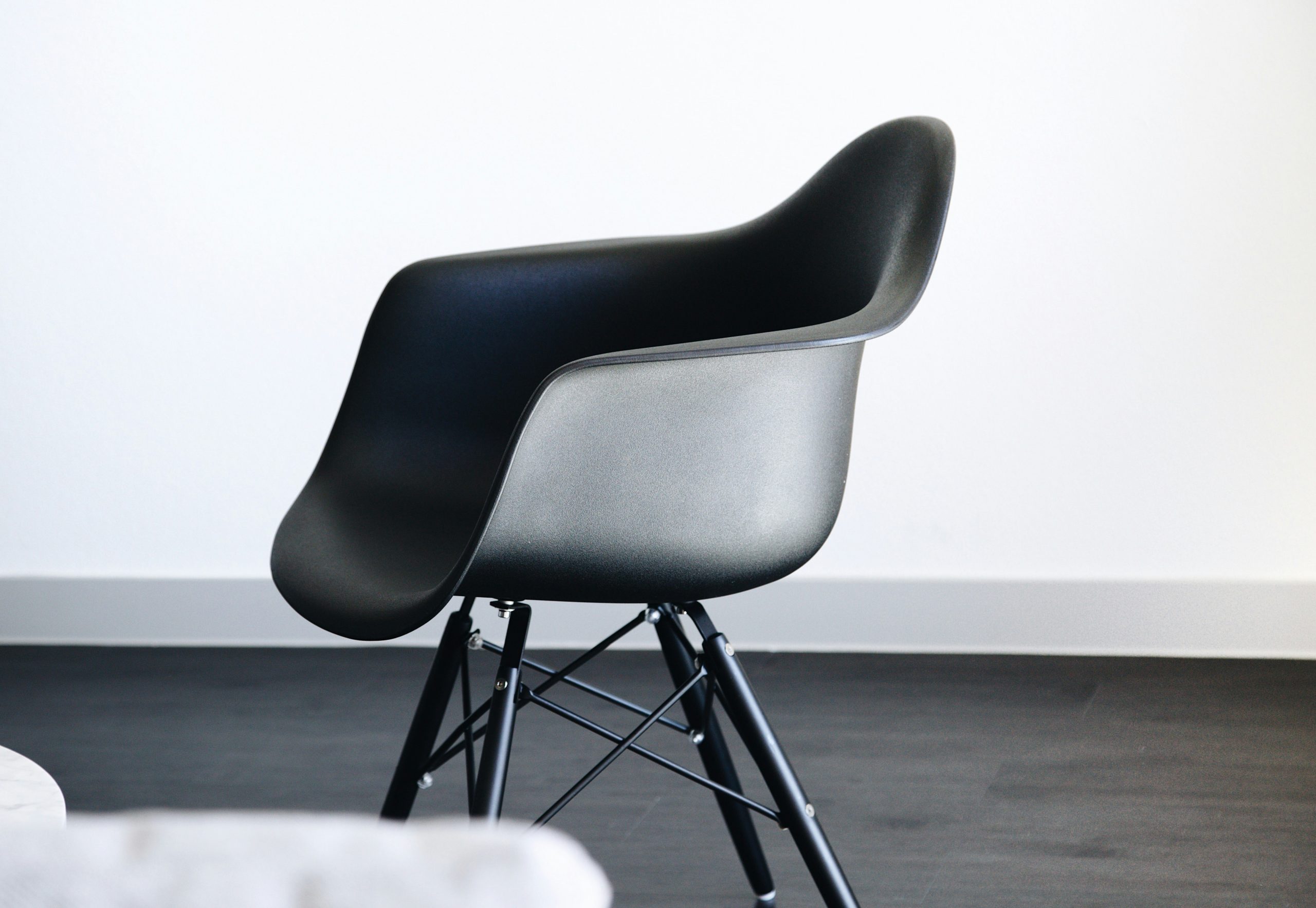
Fiberglass shell chairs reached schools through the 1950s and 1960s after Herman Miller brought the Eames design to market in 1950, with the shells molded by Zenith Plastics, usually on a plain four leg base. Original shells show a visible fiber texture and a raised edge, and the underside carries a molded or stamped mark that buyers use to separate early production from later.
Shock mounts, the rubber pads bonding shell to base, fail with age and are the standard repair. Refinishing a shell means cleaning rather than painting, since paint kills the surface and the value with it.
Faded shells come back better than most sellers expect.
Ornate Scrollwork and the Rust Beneath

Ornate castings are the reason a cast iron desk looks like anything at all, and the scrollwork traps dirt, wax and rust in equal measure. Sandblasting removes all three and takes the crisp edges along with them, leaving a frame that reads as a reproduction.
The better method is a soak, a hand held wire brush and a rust converter, followed by satin black rather than gloss. Gloss paint on old iron looks like a rental prop and buyers notice immediately.
Light pitting after treatment is expected and costs nothing on an otherwise sound frame.
Carved Pupil Initials as Patina or Damage

Carved initials split buyers into two camps with no middle ground. One side treats a name cut into a lid in 1938 as the point of the object, proof that a child sat there.
The other sees damage and wants a clean surface. Filling carved letters with tinted epoxy is possible and almost always wrong, since the repair shows under any finish.
Dealers selling to decorators keep the carving and mention it in the listing, and the desks with the best carving often move fastest.
The Round Recess for the Inkwell

Nearly every desk of the period carries a round recess for the inkwell at the upper right corner of the top. The ceramic inkwell that seats in it is usually long gone, and replacements in white porcelain or clear glass are common and inexpensive.
Measure the recess before buying an insert, since diameters vary by maker and a loose insert rattles. Some desks used a hinged brass cover over the opening, and an original cover adds meaningfully to the price.
A missing insert is a small fix rather than a reason to walk away.
Shellac Versus Varnish Under the Rag

Finish identification decides the method before any chemical comes out of the can. Denatured alcohol on a concealed spot softens shellac within seconds and leaves varnish alone, which is the entire test.
Shellac was standard on school furniture into the 1920s and can be revived with alcohol and a pad instead of stripped, saving both color and depth. Varnish and later lacquer need a chemical stripper and considerably more work.
Refinishers who test first save hours and keep the patina buyers pay for.
The Pencil Groove Along the Top Edge

A shallow groove runs along the top edge of most desks to keep a pencil from rolling off. It fills with wax, graphite and a century of grit, and clearing it is tedious work with a dowel wrapped in cloth.
Sanding the groove away flattens the profile and marks the piece as badly restored to anyone who knows the form. The groove also collects stripper, which then weeps out and ruins a new finish days later.
Careful refinishers flush it with solvent and let it dry fully before any finish goes on.
Stenciled Size Numbers on the Back

Size numbers were stenciled on the back panel or the underside in white or black paint, marking which grade the desk was built for. Those numbers are original evidence and survive only where nobody sanded.
A desk with a legible stenciled number sells above an identical desk without one, which strikes some sellers as absurd and is nonetheless true. Refinishers mask the number before stripping and leave that panel untouched by abrasives.
The same logic applies to painted district names and inventory numbers underneath.
Replacing Cracked Seat Slats

Cracked seat slats are the most common repair on wooden school seating, since each slat carries load across an unsupported span. Replacements are milled from quartersawn oak or hard maple to match, and new wood never matches old color without staining.
Buyers accept one replaced slat and hesitate at three. Original slats show a worn center and darkened ends where hands and clothing polished the wood.
A seat that has lost every original slat is effectively a new seat on an old frame, and the price should say so.
Desks Converted to Consoles and Plant Stands

Conversions keep broken desks alive when a frame is too damaged to restore for sitting. A single cast iron side with a new plank top becomes a console or a plant stand, and the market for those pieces is steady if unglamorous.
Purists object, which matters less than it once did. The conversion should be reversible, using original bolt positions rather than fresh drilling, so a future owner can undo it.
Desks with intact marks and complete hardware deserve restoration instead, and converting one of those is the quickest way to destroy value.
Matched Pairs and Unbroken Rows

Matched pairs sell for more than twice a single, and a row of six can bring several times the sum of its parts. Restaurants, libraries and schools buying back their own history are the volume buyers, and they need consistency in size, finish and maker.
Assembling a matched set from separate purchases takes years and rarely succeeds, since casting patterns changed constantly. Dealers who find an intact row from one building usually keep it together for that reason.
Breaking a row apart for quick money is the standard regret of this trade.
Reproductions and How They Give Themselves Away

Reproduction school desks have been made since the 1970s for decorators and theme restaurants, and they fool people every season. Cast detail is soft on a reproduction because the mold was taken from a finished desk rather than a pattern, losing a step of sharpness.
Bolts are metric or Phillips head, neither of which belongs on a nineteenth century frame. New oak shows uniform color and no wear in the places a pupil’s arms would have polished.
Price them as decor, which is what they are, and never as antiques.
Desks That Outlasted Their Schools

The buildings these came out of are mostly gone, demolished or converted into apartments with the original floors sanded smooth. The furniture survived because it was built from oak and iron by companies that expected fifty years of service and got a hundred and twenty.
That durability is now the entire market. Nothing made for a classroom this year will be stripped and refinished in 2140.
Refinishing one is less restoration than a negotiation over what to keep. The carved initials, the stenciled size number and the seat worn hollow are the parts that make it a school desk rather than a small oak table.
A refinisher who removes all of it ends up with something cleaner and worth less. The trade has quietly agreed that the damage is the point.
More from Home As We Make It

- 18 Affordable Places to Retire in the U.S.
- Antique Glassware That’s Worth Collecting
- Stay-At-Home Jobs That Actually Pay
- 18 Forgotten Snacks from the ’80s and ’90s
- 20 Things That Make a House Look Cleaner Than It Is
Like Home As We Make It‘s content? Follow us on MSN.


