

30 Rainy Day Activities That Keep Kids Busy
Rain on a Saturday has a particular quality. By ten in the morning the children have already been told no to going outside, and the day stretches ahead with nothing structuring it.
What follows are activities that hold attention for longer than fifteen minutes, use things most households already own, and do not require a parent to run the entire operation.
The Blanket Fort

Every generation rediscovers this and every generation improves on it. The structural problem is always the same, which is that blankets sag, and the solution is always the same, which is more anchor points than seems necessary.
Clips from the laundry cupboard hold blankets to chair backs far better than the weight of books, and a fort built with them stays up long enough to be lived in rather than rebuilt.
Cardboard Box Construction
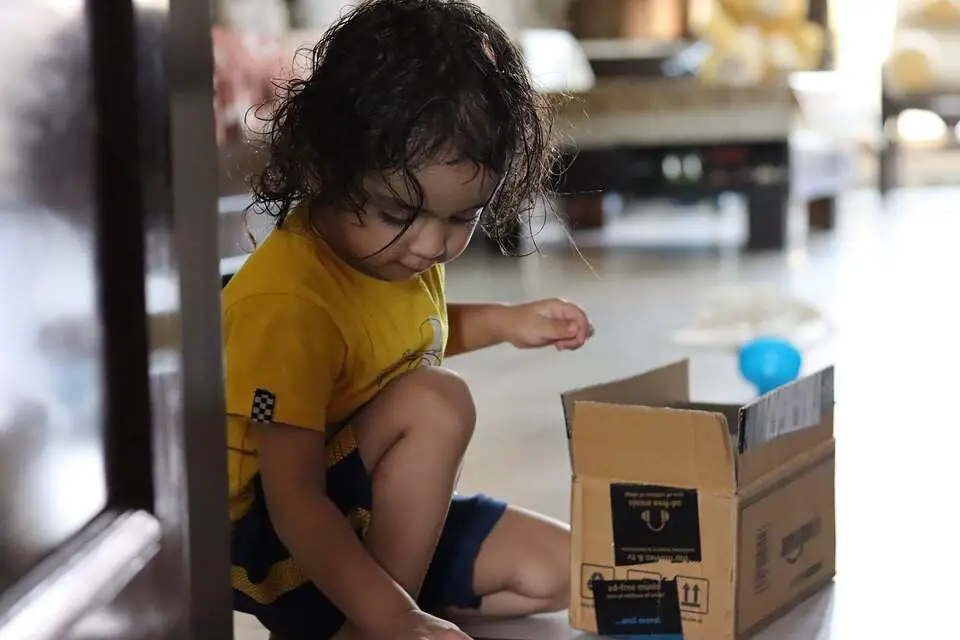
A large appliance box is the single best toy in the house and costs nothing. Children will spend hours turning one into a spaceship, a shop, or a car, and the activity absorbs decoration, cutting, and imaginative play in one project.
Furniture and appliance stores generally hand out flattened boxes to anyone who asks.
The Indoor Scavenger Hunt

A written list of twenty things to find — something round, something older than you, something that starts with the letter M — turns the house into a search area. Category prompts work far better than specific objects because they require thinking rather than recall.
Writing the list takes an adult about four minutes and buys considerably longer than that.
The Cushion Obstacle Course

Sofa cushions, chairs, and a length of yarn strung between table legs make a course that can be timed. Timing is what turns it from a five-minute distraction into a genuine competition, because children will run the same course fifteen times trying to shave off a second.
A stopwatch on a phone and a whiteboard for the record makes it self-sustaining.
Homemade Play Dough

Flour, salt, water, oil, and a spoonful of lemon juice cooked briefly on the stove produce a dough that lasts for weeks in a sealed container. Making it is half the activity, since children measure, stir, and choose the colors.
It costs a fraction of the store-bought version and can be made in whatever quantity the afternoon requires.
Oobleck

Cornstarch mixed with water in roughly a two-to-one ratio behaves as a solid under pressure and a liquid at rest, which is genuinely startling the first time a child encounters it. It is a non-Newtonian fluid, and the name is worth teaching alongside the mess.
Cleanup is easier than expected because it dries to a powder that sweeps up.
The Marble Run

Cardboard tubes, tape, and a wall or a large sheet of cardboard make an engineering project with immediate feedback. Children discover slope, momentum, and the fact that corners need banking without any of it being presented as a lesson.
Saving paper towel tubes for a few weeks in advance makes this possible on demand.
Stop-Motion Animation

A phone, a stack of books to hold it steady, and any set of toys produce a short film in an afternoon. Free apps handle the frame capture and playback, and children quickly work out that smaller movements make smoother results.
A ten-second finished clip typically represents well over an hour of absorbed work.
Paper Airplane Trials

Three designs, a marked launch line, and a tape measure turn folding into an experiment. Recording each distance on a chart introduces the idea of repeated trials, since one lucky throw proves nothing.
The dart, the glider, and the wide-winged design behave differently enough to make the comparison interesting.
Origami

A few sheets of square paper and a set of instructions produce something out of nothing, which is exactly the appeal. The traditional crane is the well-known model but requires more patience than younger children have; a jumping frog or a simple boat gives a faster payoff.
Library books and printed diagrams work better than video for children who need to move at their own pace.
Shadow Puppets

A lamp, a bare wall, and a pair of hands is the entire equipment list. Children who exhaust the hand shapes move naturally to cutting figures from card and mounting them on skewers, which extends the activity considerably.
A sheet hung across a doorway with a light behind it makes it a proper performance.
The Puppet Theater

A box with a rectangle cut from one side becomes a stage, and socks become the cast. The performance matters less than the preparation, which usually involves an hour of arguing about the plot.
Children who resist performing will often happily write for someone else to perform.
The Family Talent Show

Assigning a time — say four o’clock — gives the whole afternoon a deadline and a purpose. The requirement to prepare something absorbs the hours before it, which is the actual mechanism at work.
Adults being required to perform as well is what keeps it from feeling like an assignment.
The Recorded Radio Play

A voice recording app, a story, and a few household objects for sound effects produce something children will play back repeatedly. Sound effects are the part that generates the most invention, since a creaking door and a rainstorm both have to be manufactured.
The absence of video removes the self-consciousness that stops some children from performing.
Writing and Illustrating a Book

Folded and stapled paper makes a book, and a book demands a story with a beginning and an end. Younger children dictate while an adult writes and then handle the illustration themselves.
Finished books kept on the shelf alongside the real ones get reread for years.
The Family Newspaper

Interviews, a weather report, a review of last night’s dinner, and a comic strip fill a page quickly. The interview format gives shy children a script and gives talkative ones a job.
Producing it on a single sheet keeps the scope achievable within one afternoon.
Letters to Relatives

Actual paper mail arriving for a grandparent is an event, and children understand this once they see the reaction. Writing, decorating, addressing, and stamping involves four distinct tasks with different skills.
The reply, arriving days later, extends the activity well past the rainy day that produced it.
Learning a New Card Game

A standard deck supports dozens of games at every difficulty level, and most children only know two or three of them. Games with a bidding or memory component hold attention far longer than pure luck games do.
Teaching a game an adult played as a child adds a layer that children reliably find interesting.
Card Tricks

A single self-working trick, learned properly and practiced until smooth, gives a child something to perform for the rest of the family. Self-working means the trick depends on the arrangement rather than on sleight of hand, which makes it achievable in an afternoon.
The practice required is genuine and absorbs far more time than the trick’s length suggests.
Charades

The written slips are half the activity, and children take the writing seriously once they realize a badly chosen prompt makes for a bad round. Categories agreed in advance prevent the arguments that otherwise end the game early.
It scales to any number of players and requires nothing but paper.
A Jigsaw Puzzle Left Out

A puzzle on a table that nobody has to finish in one sitting gets returned to throughout the day. Family members drift past, place three pieces, and drift away, which is a different rhythm from most activities.
Sorting by edge and by color first is the technique worth teaching, since it converts an overwhelming pile into a system.
A Baking Project

Measuring, mixing, waiting, and eating covers most of an afternoon and produces something at the end. Recipes with a resting or rising stage are better for a long day than fast ones because the wait creates natural structure.
Letting children read the recipe themselves builds a skill that outlasts the biscuits.
Cooking a Dish From Another Country

Choosing a country, finding a recipe, and cooking it together turns lunch into a project with a research phase. Children pick a country on a map far more readily than they pick a dish from a list.
The unfamiliarity is the point; a dish nobody has eaten before gets discussed rather than merely consumed.
The Junk Drawer Invention Challenge

A tray of odd items — a clothespin, a rubber band, a cork, a length of wire — and a stated problem to solve produces engineering with no correct answer. Constraints make it work: three items only, ten minutes, must stand on its own.
Presenting the finished invention to the family is the part children remember.
Building Brick Challenges

Construction toys hold attention far longer with a prompt than without one. A card drawn from a stack — build something that floats, build a bridge that holds a book, build a vehicle with no wheels — replaces aimless building with a problem.
Writing twenty prompts once gives the household a reusable resource.
The Time Capsule

A sealed container with letters, drawings, a list of favorite things, and a newspaper page gets buried in the garden or hidden in a cupboard with a date on it. Writing to a future version of yourself is a genuinely strange exercise for a child and produces unexpectedly thoughtful results.
Five years is long enough to be interesting and short enough to actually happen.
Indoor Camping

Sleeping bags in the living room, flashlights, and stories told in the dark work as well inside as they do outside. The novelty comes almost entirely from sleeping in the wrong room, which costs nothing.
Dinner eaten on the floor from a plate balanced on a knee completes the effect.
Sprouting Seeds

Dried beans on damp paper towel in a clear jar germinate within a few days and show the root and shoot developing against the glass. Any dried bean from the pantry works, which makes this free.
Children check the jar several times a day for a week, which extends one rainy afternoon into a much longer project.
The Homemade Escape Room

Riddles hidden around the house, each leading to the next, ending in a locked box with something worth finding. Building one for the children takes an adult about an hour; the better version is having older children build one for younger ones.
Difficulty is hard to judge in advance, so a written hint sealed in an envelope prevents the whole thing stalling.
The Virtual Museum Tour

Many of the world’s major museums publish high-resolution images and walkthroughs of their collections at no charge. Choosing a single object and finding out everything about it works far better than wandering the whole collection.
Ending with the child drawing the object turns passive viewing into something active.
What the Weather Is Actually Doing

There is a reason the rainy day looms so large in family memory. It removes the default plan, and removing the default plan is what forces the invention of something better.
Most of the activities above are older than any screen, and they persist because they share a structure: a small constraint, a task with an end, and something to show for it. The rain is not the problem. It is the excuse.
More from Home As We Make It

- 18 Affordable Places to Retire in the U.S.
- Antique Glassware That’s Worth Collecting
- Stay-At-Home Jobs That Actually Pay
- 18 Forgotten Snacks from the ’80s and ’90s
- 20 Things That Make a House Look Cleaner Than It Is
Like Home As We Make It‘s content? Follow us on MSN.


