

27 School Supplies Families Reuse Each Year
The supply list arrives in August looking exactly like last August’s, and most households buy the entire thing again without opening the closet. Half of it is already in there: a binder with three good rings, a calculator that still holds a charge, scissors nobody ever thought to clean.
What separates a supply that survives a school year from one that does not is almost never the price. It is usually a single design decision, visible to anyone who looks: a metal part where a plastic one would have cracked, a refill sold separately, a resin that flexes instead of shattering.
The Backpack with the Warranty Card Still in the Pocket

Backpack fabric is rated in denier, a measure of yarn mass per 9,000 meters of thread, and the step from a 300-denier pack to a 600-denier one buys real abrasion resistance at the corners, which are where the wear lands. JanSport covers its packs with a limited lifetime warranty to the original owner against defects in materials and workmanship, while excluding normal wear, abrasion, ultraviolet degradation and liquid spilled inside the pack; its cooler bags carry five years instead of lifetime coverage.
Zippers give out long before woven polyester does, and a replaced slider costs a small fraction of a new pack.
The Insulated Lunch Bag and Its Wipeable Liner

The shell of an insulated lunch bag is rarely the part that fails. The liner is, and liners are thin welded films of polyethylene vinyl acetate or thermoplastic polyurethane bonded over a layer of closed-cell foam.
That film tolerates a damp cloth and mild soap indefinitely, but it splits when a household runs the bag through a hot dryer or scrubs hard along a crease. Families who wipe rather than wash carry the same bag through several grades and replace nothing but the frozen gel pack riding inside it.
The Vacuum Bottle Whose Insulation Cannot Wear Out

A double-wall vacuum bottle keeps liquids hot because there is almost nothing between the two steel walls to conduct heat, and a vacuum does not settle or compress the way foam insulation does. Stanley 1913 covers its drinkware and food containers for life, and the unusual part is the scope of that promise: the language reaches degradation of thermal performance rather than defects alone, while excluding lids, seals, straws and the dents and scratches of ordinary use.
A bottle that quietly stops holding heat is the failure a household actually notices, and that is the one the coverage names. The lid gasket is the part that hardens, and gaskets are sold separately for a few dollars.
The Polypropylene Food Containers That Survive Being Dropped

Food containers molded from polypropylene carry resin identification code 5, melt near 320 to 330 degrees Fahrenheit in the commercial isotactic grades, and resist fatigue well enough to serve as living hinges. Polycarbonate is the clear alternative, far more impact resistant, but it passes its glass transition around 297 degrees Fahrenheit and softens from there, scratches easily, costs more, and is produced by reacting bisphenol A with phosgene.
For a container that lives at the bottom of a backpack, gets microwaved in a cafeteria and rides home under a stack of textbooks, the cloudy flexible polypropylene box is the one that comes back intact in June. Lids crack before bodies do, which is why replacement lids are worth hunting for.
The Combination Padlock from Last Year’s Locker

A padlock has no consumable component whatsoever. The Master Lock 1500D, the one that shows up on middle school supply lists, has a body roughly one and seven eighths inches wide and a hardened steel shackle, and its combination is set at the factory and cannot be changed; the companion 1500iD model lets the owner program a directional code instead.
What households actually lose is the number, not the lock, and manufacturers maintain a lost-combination process that requires proof of ownership rather than a replacement purchase.
The Graphing Calculator That Stays on the Approved List

The ACT permits four-function, scientific and graphing calculators and prohibits any model carrying computer algebra system functionality, which leaves the TI-84 Plus, the TI-84 Plus CE, the TI-84 Plus CE Python, the TI-83 Plus and the non-CAS TI-Nspire CX II admissible on test day. The TI-83 Plus reached the market in 1999 and still sits inside that policy alongside models released decades later.
That stability is the reuse mechanic: a device bought for an eighth grade algebra class remains admissible for college entrance testing four years on, with no annual model refresh forcing a repurchase. On the rechargeable color models the battery is the only wear item, and it is replaceable.
The Solar Scientific Calculator with A Backup Cell

Below the graphing tier sits the four-function and scientific class, where models like the TI-30XIIS run on a photovoltaic strip with a small backup cell behind it. Texas Instruments lists that model as approved for the SAT, the ACT and Advanced Placement exams, so a shift in classroom policy is unlikely to retire it.
These units have no moving parts beyond the keys, no firmware to update and no charge cycle to degrade, which is why the same one gets passed through three siblings and still wakes up under a desk lamp.
The Wired Headphones Kept for Testing Days

Online assessments still require wired headphones in many districts, and a wired pair has no battery chemistry to degrade over a summer in a drawer. The failure point is mechanical and specific: the cable at the strain relief just below the plug, where repeated bending fatigues the conductors.
Models with a detachable cable and a standard three-conductor plug turn that failure into a parts replacement instead of a purchase. Padding on the earcups perishes before the drivers do, and replacement pads for common models are widely sold for a few dollars a pair.
A pair stored in a hard case rather than loose in a locker will outlast the student who owns it.
The Three-Ring Binder Molded from Polypropylene

The cheap binder is vinyl laminated over chipboard, and chipboard is compressed paper: one wet locker floor and it swells, delaminates and never closes flat again. A binder molded entirely from polypropylene has no paper core, wipes clean, and survives a crushed backpack by flexing.
The ring mechanism matters more than the cover, since rings that fall out of alignment tear every sheet on the pack; D-shaped rings are rated to hold more paper than round rings of the same nominal size and let sheets lie against the straight back edge rather than curving around a circle.
Tabbed Dividers with Reinforced Edges

Dividers die at the tab, which is the thinnest and most handled part of the sheet. Sets with a polyester film laminated along the tab edge resist the tearing that ends a paper-only set within weeks, and the reinforcement is visible as a slightly glossy margin.
Insertable dividers extend the life further, because the printed card slides out and a new subject gets written on the reverse, so one set of eight covers a different schedule every year. Households that pull the cards before recycling a binder keep the most expensive part.
Leftover Filler Paper and Its Punched Openings

Half a pack of filler paper survives almost every school year, and loose-leaf paper does not age in any way that matters. The punched openings along the margin tear first, and adhesive reinforcement rings restore a sheet for less than a cent.
Ruling is the thing worth checking before buying more: wide ruled paper spaces lines eleven thirty-seconds of an inch apart, college ruled nine thirty-seconds, and a teacher who specifies one will not accept the other. Sheets that yellow at the edges have been stored in sunlight, not aged out.
The Composition Book Bound in Sewn Signatures

A sewn composition book is assembled from folded groups of sheets stitched through the fold, which is precisely why science teachers assign them for lab notebooks: a page cannot be removed without leaving evidence. That construction also outlasts a wire spiral in a backpack, since there is no metal to crush and no perforation inviting a tear.
Unused pages carry forward without complaint, and the standard 100-sheet book rarely gets filled in one course. The marbled cover is board stock, and it curls in humidity but does not fail.
The Spiral Notebook Still Under Guarantee

ACCO Brands will replace any Five Star product returned within one year of the purchase or delivery date, whichever is longer, with damage from misuse or abuse excluded, which makes the notebook one of the few paper goods on a supply list carrying a written promise. The wire is the weak point on any spiral notebook; once a coil is crushed it snags every page turn, though the coil can often be eased back into round with pliers.
Leftover sheets in a five-subject book are simply unused inventory, and a fresh subject divider reassigns them.
The Metal Ruler with Etched Markings

Markings printed on plastic wear off under a sliding pencil within a year, and a ruler with faded graduations is worse than none. Graduations etched or engraved into steel or aluminum are cut below the surface and survive decades of the same treatment.
A steel rule also serves as a cutting edge for a craft knife, which a plastic one cannot do without shaving off a sliver of itself. Cork backing on the underside lifts the edge slightly off the page so wet ink does not smear beneath it.
The Geometry Set Whose Only Consumable Is Lead

A geometry set fails when the compass hinge loses friction and the radius drifts mid-arc. Compasses with a knurled screw through the hinge, or a threaded center bar between the legs, lock a radius and hold it through a full circle, while a friction-only hinge surrenders its setting within a semester.
The protractor has no mechanism at all and fails only by scratching, which clouds the scale without moving it. Everything else in the case is geometry rather than machinery, so the only thing a household ever buys again is a tube of standard lead, and that costs almost nothing.
The Scissors That Gum Up Rather Than Dull

School scissors almost never lose their edge on paper. They gum up from adhesive tape and glue stick residue, and wiping the blades with isopropyl alcohol restores the cut in seconds.
The pivot decides how long a pair lasts: a screwed pivot can be snugged when the blades begin to pass each other loosely, while a riveted one offers no adjustment at all. The orange-handled Fiskars pattern sitting in most school drawers was designed by Olof Backstrom and first manufactured in 1967, which is a fair indication that the geometry was settled long before any household bought a pair.
The Hand-Crank Sharpener and Its Spiral Cutter

The plastic wedge sharpener contains one flat blade that scrapes wood at a fixed angle and dulls within a semester. A crank sharpener works the opposite way, turning the pencil against a spiral steel cutter so the wood comes off progressively and the point ends up long and concentric rather than coned in a single pass.
The Carl Angel-5 builds that mechanism into a double-thickness steel case running on zinc die-cast internal gears, with a clamp that mounts it to a desk or comes off for portability. Off-center points are the ones that snap, and a fixed entry angle is what prevents them.
The All-Metal Desk Stapler

The Swingline 747 Business model is built on a die-cast base with metal construction throughout, rated at 25 sheets with the maker’s quarter-inch premium staples and holding a strip of 210 at a time. Its moving parts are a hinge, a spring-loaded pusher and an anvil that rotates between a temporary pinning setting and a permanent clinch, none of which are consumed in normal use.
The staple it takes is the ordinary desktop standard rather than a proprietary cartridge, so refills stay cheap and available decades after a given unit was sold. A jam clears with a staple remover and thirty seconds.
The Three-Ring Punch Sitting in A Drawer

Loose-leaf format in the United States spaces the ring openings four and one quarter inches apart on center, a dimension that has not changed in generations, so a punch bought for one binder fits every binder a household will ever own. Steel dies stay sharp because paper is soft; what actually fails is the plastic latch on the chip tray, and a punch with a broken tray still punches.
Adjustable models slide the dies along a rail to handle two-ring and legal formats as well, which covers the occasional oddity.
Wooden Pencils and the Grade Printed on the Barrel
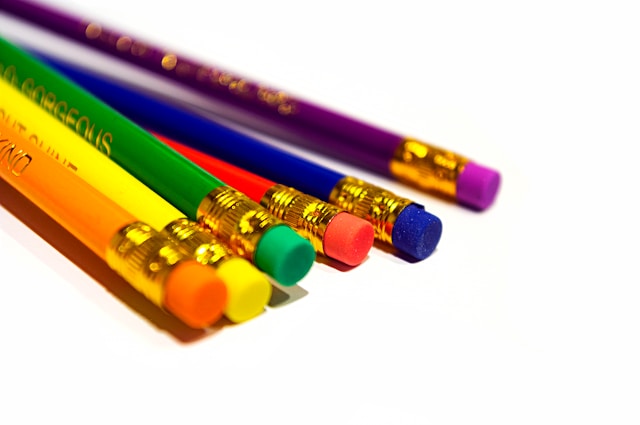
Graphite contains no solvent and no water, so a pencil recovered from the back of a drawer is chemically identical to one bought this morning. The number 2 stamped on a school pencil corresponds to HB on the European scale, where H stands for hardness and B for blackness, and the neighboring grades behave predictably: 2B lays down more graphite and smudges, 2H scratches a faint line that resists smearing.
What actually degrades is the eraser, which hardens with age. A metal ferrule crimped onto the wood holds its eraser plug far longer than a glued plastic collar.
The Refillable Mechanical Pencil

A mechanical pencil is a clutch mechanism, usually three small jaws that grip the lead and release it when the cap is pressed, and that clutch is the one tolerance in the tool that has to stay true. Nothing about it is consumed in the ordinary sense: lead in the two common diameters costs a few dollars for hundreds of segments, the eraser under the cap is a separate replaceable plug, and the jaws wear at a rate measured in years rather than semesters.
The Zebra M-701 houses that mechanism in a refillable seven-tenths millimeter body, which is why a pencil bought for a middle school geometry class is often still writing in a college backpack.
The Metal Retractable Pen Worth Recovering

Most pens are discarded because they are disposable by design, not because the writing mechanism failed. The Zebra F-701 is built from stainless steel with a knurled grip and a fine tip, and it accepts the maker’s F-series refills, so the same body writes for years while only the ink cartridge changes.
A refillable gel pen works the same way. The economics reverse completely: the barrel becomes the durable good and the cartridge becomes the supply, which is how pens worked before the disposable era.
Vinyl Erasers That Do Not Harden

Erasers made from vinyl lift graphite by abrading it away with a plastic compound that stays pliable, and they neither crumble nor yellow in storage. Natural and synthetic rubber erasers oxidize instead, turning glazed and hard, and a pink rubber eraser left through a summer in a hot car goes gummy enough to smear a page rather than clean it.
A vinyl block that has gone gray on the surface is not finished; a few strokes on scrap paper expose clean material underneath and it works like new.
Colored Pencils with Nothing to Evaporate

The core of a colored pencil is pigment suspended in a wax or oil binder, with no volatile carrier, so a tin left untouched for two years performs exactly as it did when it was closed. Crayola declines to publish a fixed shelf life for its coloring products, noting only that longevity depends on how and where they have been stored.
The real failure is invisible: a pencil dropped on a hard floor fractures its core inside the casing, and the tip then breaks off at every sharpening until the pencil is used past the damage.
The Crayon Box from Last Spring

Crayons are paraffin wax and pigment, and a solid wax stick has no water to evaporate, no solvent to flash off and no binder to cure. Broken crayons color exactly as well as intact ones, peeled crayons color better on their sides, and a box sorted back into its tray in June is a full box in September.
Heat is the only genuine enemy, since a car in July will soften a crayon enough to deform it permanently. Households that consolidate three partial boxes into one rarely need a fourth.
The Pan Watercolor Set That Rewets

Pan watercolors are cakes of pigment bound with gum arabic and a humectant, dried into a tray, and rewetting them with a brush is not a workaround but the intended method of use. A set can sit dry for years and revive under a wet brush, which is why the same tray reappears on supply lists year after year and never needs replacing.
Tube watercolors, by contrast, skin over and eventually harden into the tube. Only the small white mixing lid tends to stain, and staining does not affect a single color mixed on it.
The Markers That Were Capped in Time

Water-based washable markers dry from the tip outward when a cap goes missing, and the fiber reservoir inside can be entirely full when the nib is already dead. Storing a set horizontally keeps the ink distributed along the reservoir rather than pooled at one end, and a nib that has just begun to fade often revives after standing in a shallow dish of water for a minute.
Permanent solvent markers behave differently on thin paper: the ink ghosts through and strikes through to the next sheet, which is a property of the carrier rather than a defect.
Durability Was Never About Spending More

The objects on a supply list divide into two classes, and the division has nothing to do with quality. One class is consumed by being used, so paper, glue, graphite and ink genuinely leave the house across a year.
The other wears only at a small replaceable part, and a household that knows which class an object belongs to shops in August very differently from one that does not.
A supply list is a classroom document pressed into service as a household one. It describes what a teacher needs on thirty desks in September and has no way of knowing what is already sitting in a hall closet, which is a limit on what a list can do rather than a flaw in the list.
Treating it as something to verify against, rather than an order form to fill, is the difference between a cart of duplicates and a cart of what is actually gone.
More from Home As We Make It

- 18 Affordable Places to Retire in the U.S.
- Antique Glassware That’s Worth Collecting
- Stay-At-Home Jobs That Actually Pay
- 18 Forgotten Snacks from the ’80s and ’90s
- 20 Things That Make a House Look Cleaner Than It Is
Like Home As We Make It‘s content? Follow us on MSN.


