

27 Appliances Not Worth Buying New When Refurbished Works Fine
Buying new feels good in the moment. There’s something about unboxing a pristine appliance — the untouched finish, the factory smell, the manual still folded in its original crease — that signals a fresh start.
But that feeling fades fast, usually around the time the first credit card statement arrives. Refurbished appliances have quietly shed most of their old stigma, and for good reason: a certified refurbished unit from a reputable source often goes through more rigorous testing than a brand-new item rolling off an assembly line.
These are the appliances where paying full retail price is, in plain terms, unnecessary.
Stand Mixer

New stand mixers are wildly overpriced for what they are. A refurbished KitchenAid — the kind that gets resold after someone returned it because the color didn’t match their kitchen — is mechanically identical to the one sitting in the box at full retail.
Buy refurbished, save a hundred dollars, make the same bread.
Espresso Machine

Espresso machines are the kind of appliance that corrects you before you’ve even started. Refurbished models from brands like Breville or De’Longhi go through careful inspection before resale — and the machines themselves are built to last years beyond what most people expect, which makes the original retail premium feel, in retrospect, a little indulgent.
So a certified refurbished unit at sixty or seventy percent of retail makes more sense than it might first appear.
Air Fryer
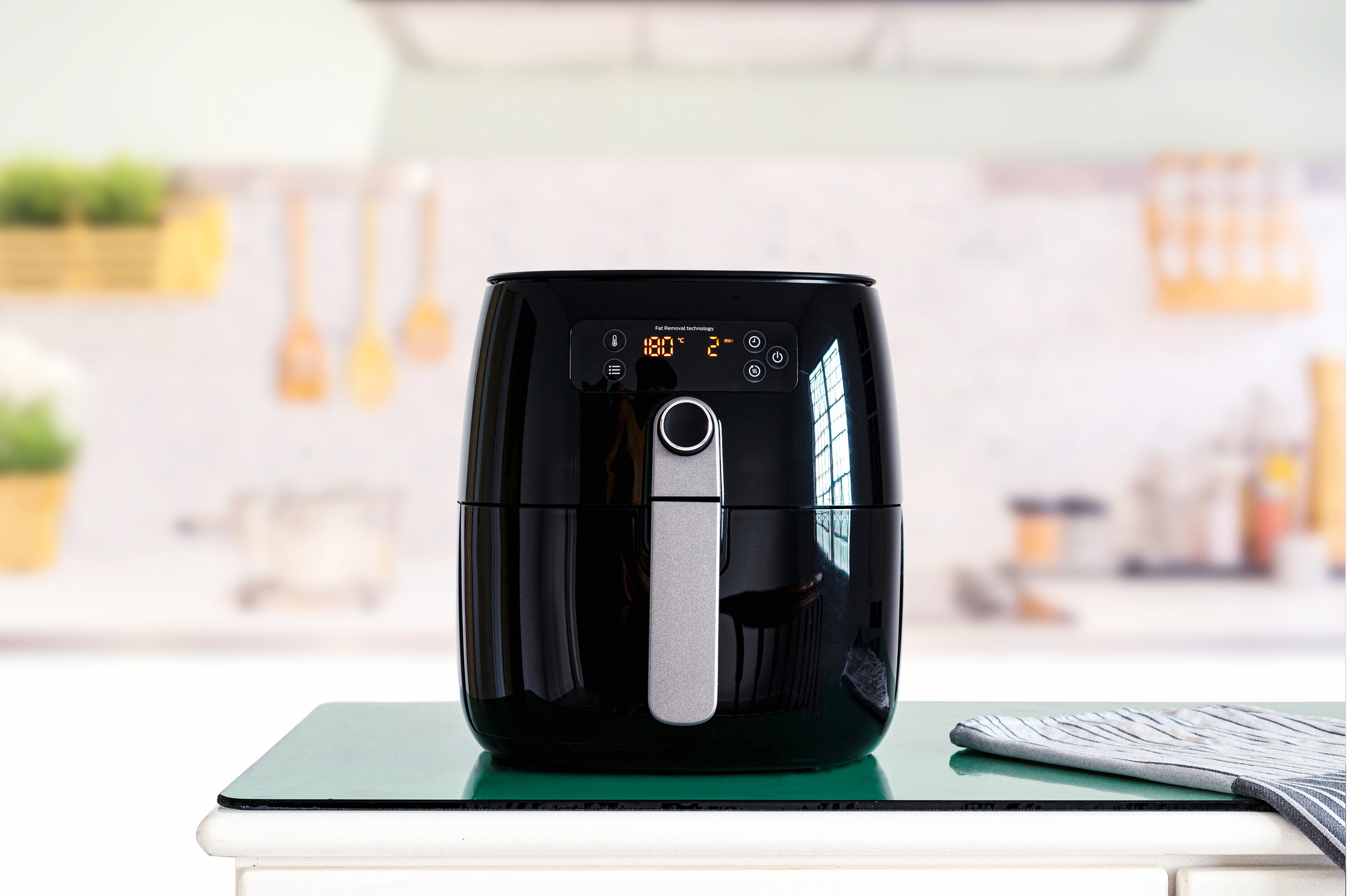
An air fryer is basically a countertop convection oven wearing a more confident name, and it doesn’t need to be new to do its job. The mechanics are simple: a heating element and a fan, moving hot air around a basket.
Refurbished versions hit resale markets constantly — people buy them as gifts, they get returned unopened or lightly used, and they end up certified and repriced at a real discount.
Refrigerator

The refrigerator is the appliance equivalent of a reliable old workhorse — stubborn, indifferent to trend cycles, built to run quietly in the background for a decade or more. A refurbished model, particularly from a manufacturer-certified program, carries the same compressor and the same cooling system as its full-price twin, just without the showroom shine.
And yet most people still flinch at the word “refurbished” when it’s attached to something this large, which is exactly why the prices stay so reasonable.
Dishwasher

Buying a new dishwasher is optional. Refurbished dishwashers — especially mid-range models from Bosch or Whirlpool — get resold in excellent condition constantly, largely because people upgrade during kitchen renovations and trade in appliances that barely have a hundred wash cycles on them.
The machine doesn’t know it’s not brand new, and neither will your dishes.
Microwave

Microwaves have been essentially the same technology since the 1970s, and the refurbished market reflects this — meaning there’s an enormous supply of lightly used, fully functional units at prices that make buying new feel like a minor act of financial recklessness. A refurbished countertop microwave from Panasonic or Toshiba will reheat leftovers with the same indifference as one straight from the factory floor.
This is not a complicated calculation.
Vacuum Cleaner

Buying a new Dyson at full retail is one of those decisions that feels considered and justified until you discover the certified refurbished version exists at nearly half the price. Dyson’s own refurbished program tests and repackages returned units with a warranty — these aren’t garage-sale pickups, they’re factory-inspected machines that happen to have been opened before.
To be fair, even the packaging on a refurbished Dyson looks more serious than a lot of what gets sold as brand new.
Toaster Oven

The toaster oven occupies a strange middle distance between appliance and furniture — always on the counter, always slightly in the way, always quietly useful in a way nobody acknowledges until it’s gone. Refurbished units circulate constantly, particularly the Cuisinart and Breville models that people buy enthusiastically and return because the footprint was larger than expected.
So the secondary market is well-stocked, the prices are genuinely low, and the toast comes out the same.
Blender

A refurbished Vitamix is one of the better financial decisions available in the small appliance category. Full retail on a Vitamix can top $500; certified refurbished models from Vitamix’s own program sell for under $300 and come with a warranty that still runs five years.
That’s not a compromise — that’s just smart.
Washer

A washing machine runs the same cycle whether it cost $800 new or $450 refurbished, and the physics of agitating laundry don’t reward retail premiums. Certified pre-owned washers from Samsung, LG, and Whirlpool go through full function testing before resale, and the savings — which can run to several hundred dollars on a comparable model — belong in a more interesting category of your budget.
The clothes won’t know the difference.
Dryer

Dryers are among the most mechanically simple appliances in any home: heat, a drum, a timer. The refurbished market for dryers is deep and well-supplied — contractors, property managers, and renovating homeowners feed it constantly — and the units available are frequently less than two or three years old.
Buying new here is a loyalty to novelty more than function.
Coffee Maker

There’s a particular kind of quiet stubbornness in a good drip coffee maker — it just runs, day after day, indifferent to whether it was purchased at full price or half of it. Refurbished Breville and Technivorm Moccamaster units surface regularly through certified resellers, and these are machines built with enough quality that a previous return or open-box status changes nothing about the cup.
The coffee is the point; the receipt isn’t.
Bread Maker

Bread makers are bought with enthusiasm and returned with guilt, which means the refurbished market for them is unusually generous. Most resold units have been used a handful of times — a few test loaves, maybe a batch of dough — before being packaged back up and resold at a steep discount.
New is not better here; new is just more expensive.
Slow Cooker

Slow cookers are functionally unchanged since the Crock-Pot became a household fixture in the 1970s, and buying one new is paying a premium for a ceramic insert and a lid that could easily be sourced refurbished for a third of the price. Refurbished models from Hamilton Beach or Cuisinart are plentiful and cheap, which is the only thing slow cookers really need to be.
Turns out, nobody ever bragged about buying their slow cooker at full retail.
Pressure Cooker

Instant Pots and similar electric pressure cookers have one of the highest return rates in the small appliance category — people buy them, find the learning curve steeper than expected, and send them back largely unused. That return stream feeds a strong refurbished market, and a certified pre-owned Instant Pot at forty percent off is, practically speaking, a better purchase than a brand-new one.
Same sealing ring, same pressure valve, same result.
Food Processor

Full-size food processors from Cuisinart or KitchenAid hold up long enough that a refurbished model sold three years into its life still has a decade of use left in it. The motor is the heart of the machine, and certified refurbished programs test that specifically.
Paying retail for a new food processor — when the refurbished market is this well-stocked — is the kind of thing that’s hard to justify on reflection.
Window Air Conditioner

A window air conditioner is essentially a sealed box of refrigerant and a compressor, and neither of those components knows or cares about its ownership history. Refurbished window units — particularly the Friedrich and LG models that circulate through certified resale channels — are tested to confirmed cooling capacity before they hit the market, and the savings over new can run to a hundred and fifty dollars or more on a larger BTU unit.
That’s a real number.
Portable Air Conditioner

Portable air conditioners are expensive new and meaningfully cheaper refurbished — and because they’re among the most commonly returned appliances (noise complaints, BTU disappointment, the realization that they’re less efficient than expected), the refurbished supply is steady. A certified refurbished unit from a brand like Whynter or Honeywell will cool the same square footage as a new one, just without the full retail pain.
Which is saying something, given how much these cost new.
Dehumidifier

Buying a new dehumidifier at peak summer pricing is paying the highest possible price for a machine that’s going to sit in a basement, quietly pulling moisture from the air, utterly unaware of its own purchase history. Refurbished dehumidifiers from brands like hOmeLabs or Frigidaire are widely available, frequently discounted by sixty to seventy dollars off retail, and go through the same function testing as anything sold new.
The basement will be just as dry.
Electric Kettle

An electric kettle heats water. That’s the complete list of requirements, and a refurbished model at half the retail price meets every single one.
Brands like Cuisinart and Breville produce kettles built to outlast their warranties several times over, and the certified refurbished versions of these models are regularly available for under thirty dollars. Paying full retail for a kettle is, in the most affectionate possible way, a little eccentric.
Rice Cooker

Rice cookers are among the most returned small appliances in the country — people receive them as gifts, duplicate them in pairs, or simply decide they prefer the stovetop method — and that return volume drives a well-priced refurbished market that rewards anyone paying attention. A refurbished Zojirushi or Aroma cooker is mechanically the same machine as a new one, and
Juicer

Centrifugal juicers and cold-press masticating juicers both live in the refurbished market in abundance, largely because juicing is one of those habits people adopt intensely and then quietly abandon, leaving a lightly used appliance that finds its way back through certified resale channels. A refurbished Breville Juice Fountain or Omega cold-press model at a genuine discount is a better entry point into juicing than a new one at full price — lower financial stakes make the habit easier to sustain.
And if it doesn’t stick, the loss is smaller too.
Toaster

A toaster is two heating elements and a spring mechanism, and somewhere in a warehouse right now there are hundreds of certified refurbished Breville four-slice toasters waiting to brown bread at fifty percent off retail. The complexity ceiling on a toaster is extremely low, which makes the gap between “new” and “refurbished” essentially meaningless in practice.
Buy the refurbished one.
Electric Griddle

Electric griddles run hot, cook flat, and don’t ask much from the person using them — and a refurbished model from Presto or Cuisinart does all of that with no meaningful difference from a new one. These units circulate heavily through the refurbished market after holiday returns, which means January and February are particularly good months to find a well-priced certified option.
The pancakes are the same in any direction.
Chest Freezer

A chest freezer is one of the most forgiving appliances to buy refurbished — the mechanics are minimal, the failure modes are well-understood, and certified resellers test the compressor and seal before anything goes back to market. Refurbished units from Midea or GE Appliances surface regularly at sixty to a hundred and twenty dollars below new retail, which is a meaningful saving on an appliance most people will run for a decade.
The frozen food doesn’t have a preference.
Indoor Grill

George Foreman-style contact grills and more serious indoor grills like the Ninja Foodi Grill both appear in certified refurbished channels at consistent discounts — usually because they were returned after a single use, or bought speculatively and never opened at all. A refurbished indoor grill with working plates and a functioning thermostat is, for all practical purposes, a new indoor grill with a better price tag.
The grill marks are identical.
Ice Maker

Countertop ice makers are expensive new and heavily discounted refurbished — and because they’re among the more frequently returned small appliances (people underestimate their water-use requirements or find them louder than expected), certified resale inventory stays well-stocked. A refurbished unit from Frigidaire or hOmeLabs at forty or fifty dollars below retail makes ice at the same speed and the same quality as its full-price counterpart.
Buying new here is largely an act of faith in novelty.
The Math Was Never That Complicated

Full retail pricing on appliances has always carried something extra in it — the factory packaging, the unmarked finish, the sense of a thing that belongs entirely to you. But appliances aren’t sentimental objects. They run cycles, they heat things, they cool things, and they do all of it with the same competence whether they cost full price or not. The refurbished market has grown serious — manufacturer-certified programs, real warranties, tested components — and the reasons to default to new have become genuinely thin.
So next time an appliance needs replacing, the better question isn’t whether to go refurbished. It’s why you’d bother going any other way.
More from Home As We Make It

- 18 Affordable Places to Retire in the U.S.
- Antique Glassware That’s Worth Collecting
- Stay-At-Home Jobs That Actually Pay
- 18 Forgotten Snacks from the ’80s and ’90s
- 20 Things That Make a House Look Cleaner Than It Is
Like Home As We Make It‘s content? Follow us on MSN.


